
In 2014, two entrepreneurs in Tunis started a company with, in their own description, two laptops and $2,000. Nine years later, German biotech company BioNTech agreed to buy it for up to £562 million, about $680 million, in the largest acquisition in its history. The company was InstaDeep, and its founders, Karim Beguir and Zohra Slim, built one of the clearest examples of an African-founded technology company becoming a global player.
This is not a story of overnight success. It involves years without salaries, a pivot, an early move abroad and a long partnership that turned into an exit. Each stage holds lessons for founders building far from the traditional tech capitals.
The founders
Karim Beguir trained as an engineer at France’s École Polytechnique and studied applied mathematics at New York University, then worked in quantitative finance. Zohra Slim is a self-taught technologist who had previously run a digital communication agency. InstaDeep later listed her as co-founder and Chief Web Officer, while Beguir became CEO.
The pairing mattered. One founder brought deep mathematical training; the other brought hands-on experience building software and running a digital business. Many successful founding teams combine those two kinds of knowledge.
Starting small in Tunis
InstaDeep began in Tunis in 2014 with minimal resources. Beguir has said that investor interest was minimal at the start, budgets were stretched, and the two founders did not take a salary for years, according to an interview with African Business.
Accounts differ slightly on the early focus. Dealroom describes the company as working initially on web projects before concentrating on AI to solve complex industrial problems. TechCabal dates the company’s official repositioning as an AI company to 2015. What is consistent is that the founders moved toward decision-making AI for industry early, years before generative AI became a mainstream investment theme.
Going global early
According to ActuIA, InstaDeep was based in London from 2015, while keeping its roots and teams in Tunis. Over the following years it opened offices in Paris, Lagos, Dubai, Cape Town, Berlin, Boston and San Francisco, and later in Kigali, Rwanda, in October 2023.
The London base gave access to customers, talent and investors, while the African offices gave access to engineering talent that was often overlooked. Beguir has repeatedly emphasised that talent in places like Tunis and Lagos was a competitive advantage, not a compromise.
Funding: patient and late
InstaDeep raised relatively little in its early years. According to ActuIA, it raised $7 million in 2019 from AfricInvest. In January 2022, it raised a $100 million Series B led by Alpha Intelligence Capital and CDIB, with BioNTech and Google among the investors, as TechCrunch reported.
The sequence is instructive. The company spent years proving its technology with industrial customers before raising a large round, which meant the Series B was raised from a position of demonstrated capability.
From partner to owner: the BioNTech deal
InstaDeep and BioNTech had worked together since 2020 through a joint AI innovation lab, and BioNTech invested in the 2022 Series B. In January 2023, BioNTech announced it would acquire InstaDeep for up to £562 million, including up to £200 million in performance-based milestone payments. At the time InstaDeep employed around 240 people across its offices.
Because the two companies had already built projects together, the acquisition carried less integration risk than a typical deal. BioNTech was buying a capability it had already tested.
After the acquisition
InstaDeep has continued to operate as a UK subsidiary of BioNTech, with Beguir still leading it. According to ActuIA, BioNTech allowed InstaDeep to keep serving clients outside healthcare, because its AI expertise benefits from work across several sectors. In a 2024 interview with TechCrunch, Beguir said the focus since the acquisition had been deploying AI at every step of BioNTech’s pipeline. Beguir received a TIME100 Impact Award in February 2024.
Speaking to AFP, Beguir said the company showed that a startup launched in Africa with very limited resources could become a major international player. He has also highlighted a persistent obstacle: it can sometimes be easier for a young African engineer to move to Europe than to another African country.
Lessons for founders
1. Choose a hard problem before it becomes fashionable
InstaDeep focused on decision-making AI for industry long before AI dominated venture funding. Being early meant years of difficulty, but also deep expertise by the time demand arrived.
2. Treat local talent as a strategy
Building engineering teams in Tunis, Lagos and other African cities was central to the company’s model, not a cost-saving afterthought.
3. Separate headquarters from origin when the market demands it
Moving the head office to London gave access to customers and capital without abandoning the original teams. Founders in smaller markets face this choice often, and it does not have to be either-or.
4. Partnerships can become exits
The BioNTech relationship began as a collaboration, became an investment and then an acquisition. Strategic partnerships with larger companies are one of the most realistic exit routes for deep-tech startups, as we also see in the wave of African startup M&A in 2026.
5. Raise when you have proof
A small early round and a large later round, after customers and partners had validated the technology, gave the founders stronger negotiating positions.
Why the story still matters
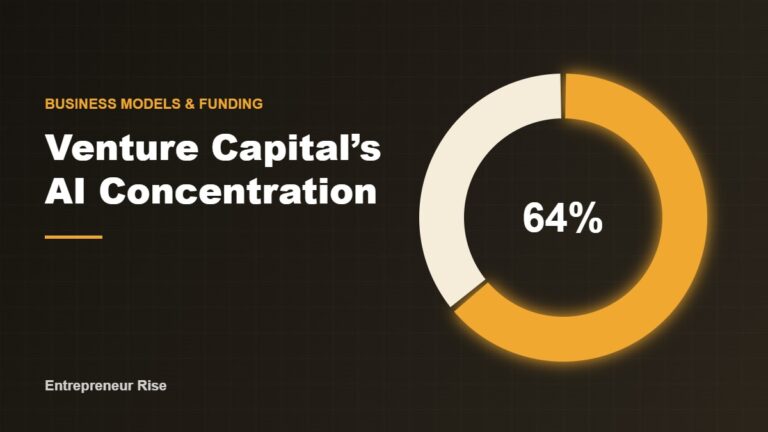
In 2026, global venture capital is heavily concentrated in AI, as our analysis of Q3 2026 funding data shows, and much of it flows to a few hubs. InstaDeep remains a reference point for founders in North Africa and beyond: proof that a world-class AI company can start far from Silicon Valley, with talent that the market undervalues.
Sources
- TechCrunch, BioNTech acquires Tunisian-born and UK-based AI startup InstaDeep for £562M (Jan 10, 2023)
- TechCrunch, InstaDeep’s acquisition is a classic case of an African startup gone global
- TechCrunch, Interview with Karim Beguir (Oct 2024)
- African Business, African AI pioneer InstaDeep ready for future after €500m takeover
- ActuIA, What has become of InstaDeep three years after its record takeover by BioNTech
- Gulf Times / AFP, InstaDeep CEO takes AI from Tunis to London
- Seedtable, InstaDeep exit profile
Comments